![]() |
Photos: First (Will Johnston/Leicester Mercury) and last photo of Gordon borrowed from The Hinckley Times where I briefly worked as a typesetter of obituaries for a while. All other photographs are my own.
![]() |
Photos: First (Will Johnston/Leicester Mercury) and last photo of Gordon borrowed from The Hinckley Times where I briefly worked as a typesetter of obituaries for a while. All other photographs are my own.
What do learn when I read these letters?
I got quite upset the other day when I got the call to collect a repaired car.
It was my sister’s; I’d organised the repair in her absence, and I told the garage she’d settle the bill when she was back from her holiday. But of course, the garage, quite correctly, reminded me it couldn’t release the car without payment. So I paid.
Then it hit me. In that moment, as I settled the bill, I wondered why is it that I am expected to release ready-to-use artwork and then wait weeks or months for payment, often long after the work’s actually been deployed by the client?
I was staggered to grasp in that moment that in almost 30 years of working as a full time freelance illustrator running a limited company, the payment system hasn’t evolved. Every time I ask for a deposit, I’m looked at askance. Historically, too, suggesting it to an agent has them running scared — fearing that if their agency charges a deposit and the next one doesn’t, the client will simply go to that next one instead. There’s been the occasional downpayment, but in hundreds and hundreds of jobs, I can probably count those on my fingers.
It takes boldness to bring about change and I’ve felt like a lone voice for years, but I was overwhelmed that day by how different my financial machinations could look if work was paid for on delivery of artwork.
There’s hope. One client recently offered what they called their ‘new-style’ contract, nervous I wouldn’t like it — but it offered a third on signing the contract, a third on delivery of artwork, and the final third when the work was published. Now THAT sounded…evolved. Still not perfect, but thoughtful. And I couldn’t sign quick enough.
I’ve three decades of managing a business with a traditionally difficult and unpredictable cashflow; I’m good at it. But I’d rather not have had to get good at managing a wildly fluctuating income, based not on a variable stream of work but on the unknowable due date of the payment for that work. I spend a lot of business hours managing money, and always have — hours that could be spent doing other things. And seriously; in all that time, despite the increases in speed at which work can be generated and sent, the immediacy of modern bank transfers, the myriad options for quick online payments, technological marvels and invoice management, the system for ‘talent-makes-work > bills client > client uses work > sits on payment’ hasn’t changed.
And it really, really needs to.
I might do all sorts of fancy stuff as part of this job, but I've always done simple lettering for book covers - hundreds of them, many of which I never post.

I've done LOADS of book covers - here are a few!
Here’s how a conversation went last week about a new book cover. I’m posting it because it’s not the first of its type, and its tone bothered me.
It’s a neat encapsulation of the kind of conversation I’m having more and more, but I wonder if you, as reader, also see the client’s emphasis on me charging too much, rather than the client offering too little.
Friendly and professional, it’s message beneath the words that I’m concerned about.
— — — — — — — — — — — — — — — — — — — — — — — — — — — — — — — — —
I was taught from the very beginning that the client approaches the illustrator (or photographer, or designer), outlines what they would like doing, and asks for a quote or estimate. The artist then generates a proposed figure, often with a scope of work and terms, which the client may accept, reject, or negotiate on.
I don’t remember me ever telling my builder what he should charge for the job I’ve asked him to do, told my accountancy firm they should actually halve their bill, nor listened to an estimate from my car mechanic and told him that no, actually £200 is all I’ve got, so.
But almost thirty years into this industry, am I out of date with this line of thinking?
In this climate is it a case of ‘take anything going’ and I should be grateful?
Are the days of determining your own fees gone, or am I right to adhere to a career-long policy of curating my own fee structure?
Could an AI system make this cover for zero pence instead, and should I therefore just be happy I was approached?
I want to know what you think!
The conversation is lightly edited for anonymity and brevity (and none of the books in the picture above are related to this conversation, to be clear).
— — — — — — — — — — — — — — — — — — — — — — — — — — — — — — — — —
Client:
We’d like you to do this book cover. You’ve already worked on some covers for this author.
We will have a think about what the cover art should include but perhaps this brief summary already gives you some ideas. As the book is publishing in June we’d like to send you the art brief in early December and have the artwork for January 2023: you can let us know what is possible on your end. We can offer a fee of £500.
I look forward to hearing from you and hope that we will have the opportunity to work together.
Note that there’s no mention of whether that £500 is expected to cover a buy-out, any particular set of usages or geographical applications— so it can’t be assessed as appropriate or not by the artist.
— — — — — — — — — — — — — — — — — — — — — — — — — — — — — — — — —
Me:
Thanks very much for emailing. Nice to hear from you! I apologise for the delay as I was travelling for much of Wednesday and all day yesterday.
The book sounds wonderful and it would be great to keep the continuity by working on the cover for this author. I really enjoyed illustrating their previous books.
My fees for book covers however are much higher than the one you propose, particularly for a wraparound. Industry standard rates have admittedly not kept pace with inflation terribly well, but still sit around the £1000-£2000 mark and for the US, in the region of $2000-$4500.
Let me know if your fee is a suggested ‘starter for ten’ on which we can negotiate, or whether that is all you have available for this. I would love to do it!
All the best, Sarah.
Sounds positive and flexible — doesn’t it? Hm, maybe not!
— — — — — — — — — — — — — — — — — — — — — — — — — — — — — — — — —
Client:
We appreciate that you charge a higher rate and we are sorry but we cannot match this.
Thanks for getting back to me so swiftly and again, thank you for creating fantastic covers for [publisher’s name].
I charge a higher rate than — than what? Their other artists? Than what they’re used to paying? Higher than the amount they think is fair?
OK; a little context might be required.
— — — — — — — — — — — — — — — — — — — — — — — — — — — — — — — — —
Me:
Thanks for the reply!
Just to give context for my email, [publisher] paid $3000 for their cover for [title of book by the same author] in 2018, and the bill for title modifications to the cover for [another book by the same author] was £100 in 2019. It was the same for similar title modifications to turn the cover of [book] into [different edition].
So £500 for a full wraparound cover is not an appropriate fee, and although I’m fully aware that someone else (perhaps, but not necessarily, a less experienced illustrator) might eagerly take this on, I’m almost thirty years into the industry and know how long a good wraparound cover takes, and I also know the experience and expertise I bring to my covers.
I do understand that you are a smaller-sized publisher, and I’m sorry it didn’t work out on this one, as I feel quite strongly about cover continuity for author series and presumably this one will look completely different.
But I feel more strongly about fees being structured properly, and I always take the trouble to expand upon a fee if it is ever rejected, so my clients know I’m coming from a place of careful consideration and experience, not greed or arbitrary figures.
Thank you for reading!
With this reply I realised I’d leapt into defending my perfectly fair and appropriate fees (which I don’t need to) while also being rather firm in my stance. (The urge to defend or explain one’s fees is often something that needs to be kept in check!)
— — — — — — — — — — — — — — — — — — — — — — — — — — — — — — — — —
Client:
[. . . . . .]
And that’s where it ended. Fair enough, as there’s not a lot more for the client to say.
— — — — — — — — — — — — — — — — — — — — — — — — — — — — — — — — —
But I’m interested to know what you think. This upcoming 30-year anniversary has had me reviewing a LOT of practises and habits, and there are more articles about these coming up.
Because if I’m to spend another decade or two at the coalface, there are things that need reviewing, dismantling and, as a result, rebuilding, revamping or rejecting. And those things, along with the unavoidable creative review and reflection, will shape what the next chapter of this long and busy career looks like.
Our friend and long-term Inkymole collaborator Ed Garland is finally on Instagram, after moving away years ago and becoming Dr. Ed. This is good news.
After meeting up with him for a weekend recently, I’ve been thinking of all the projects we worked on together. Obviously I hope there will be more now that his gruelling study schedule has eased off, but I wanted to share a few as they emerged at a time when social media was still new, and were therefore only seen by the people who received a copy, attended an exhibition, or were part of the project.
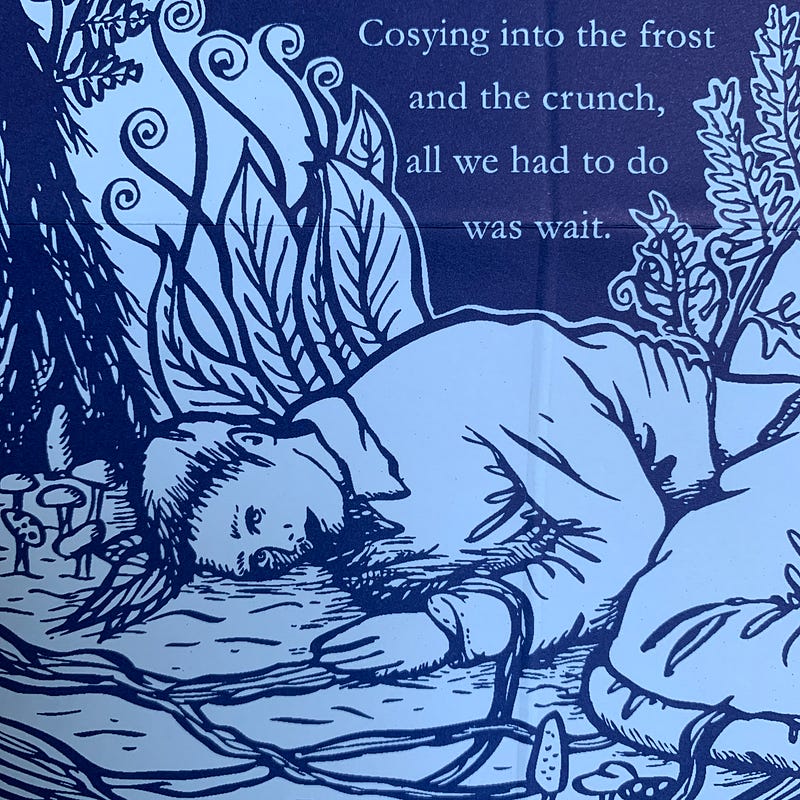
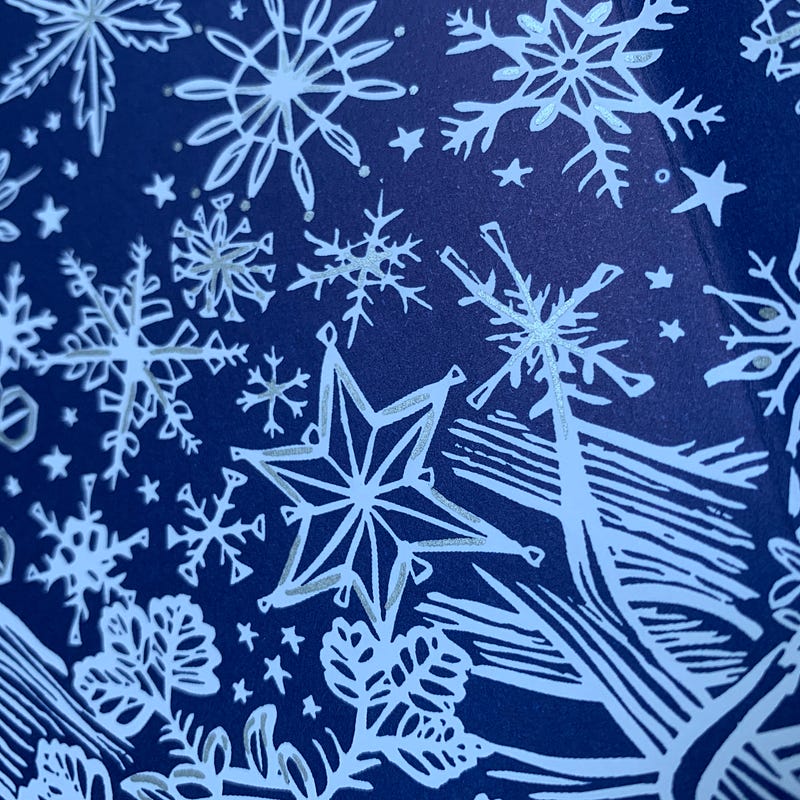
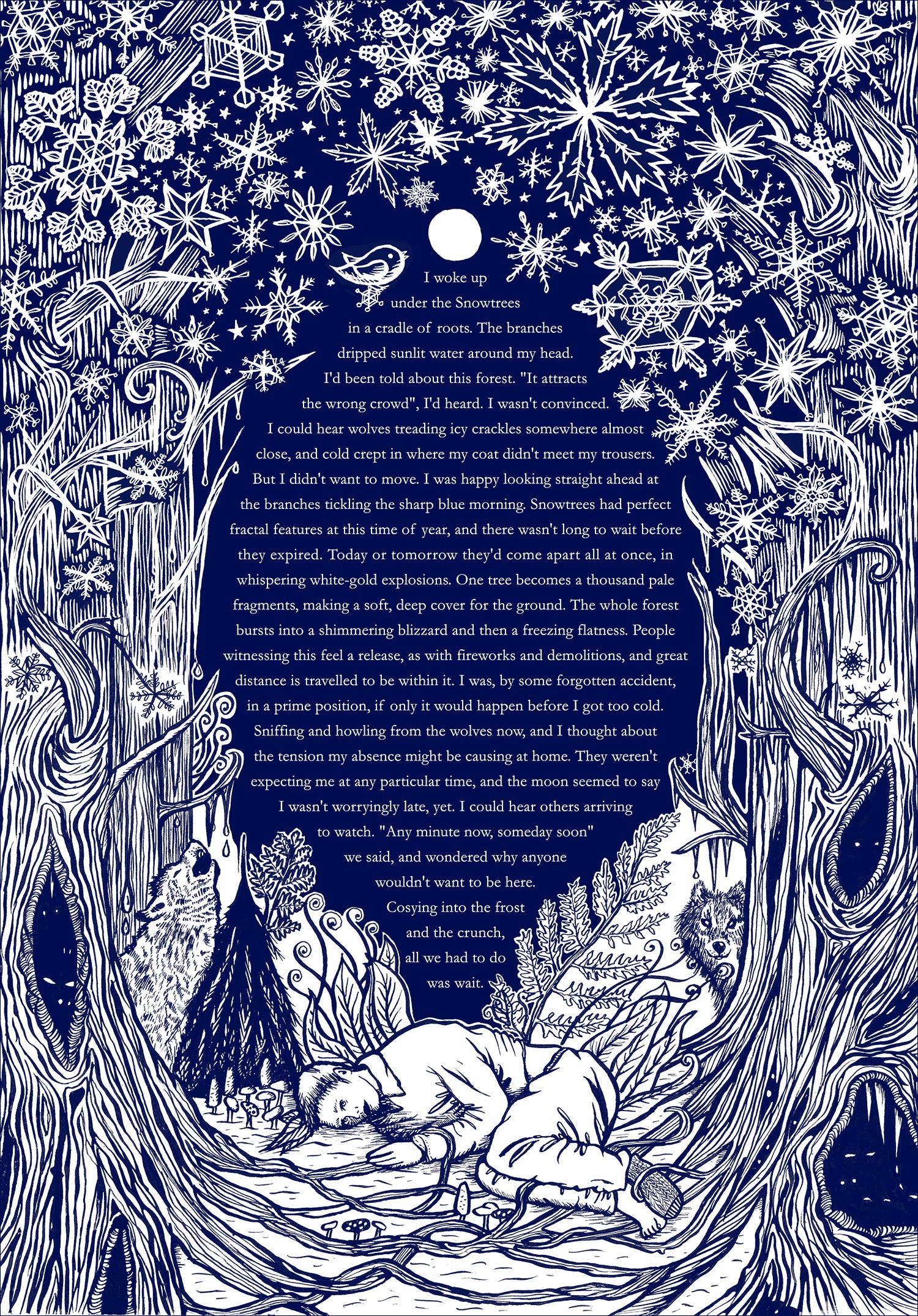
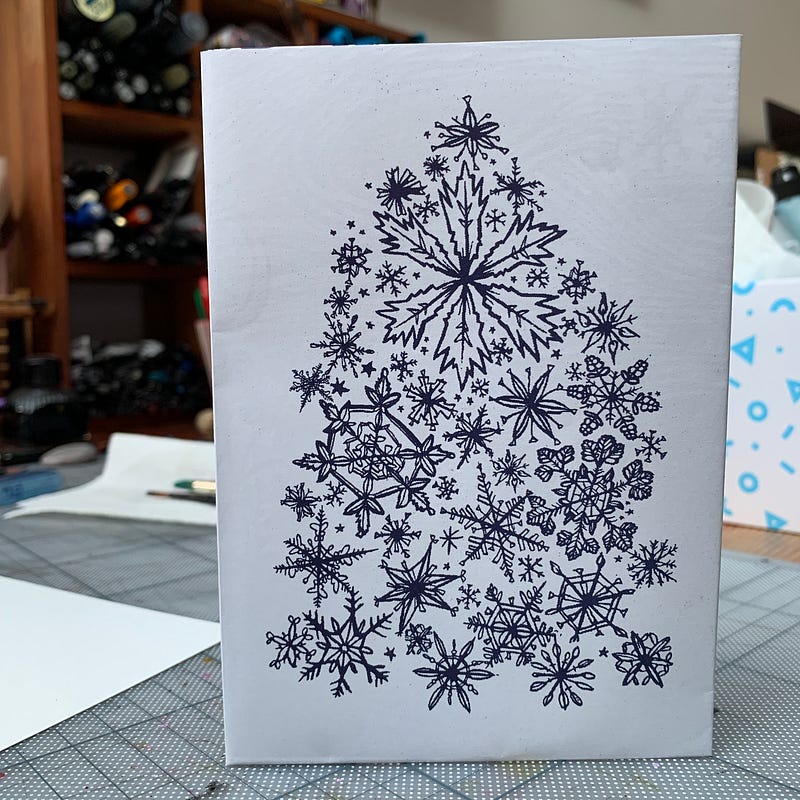
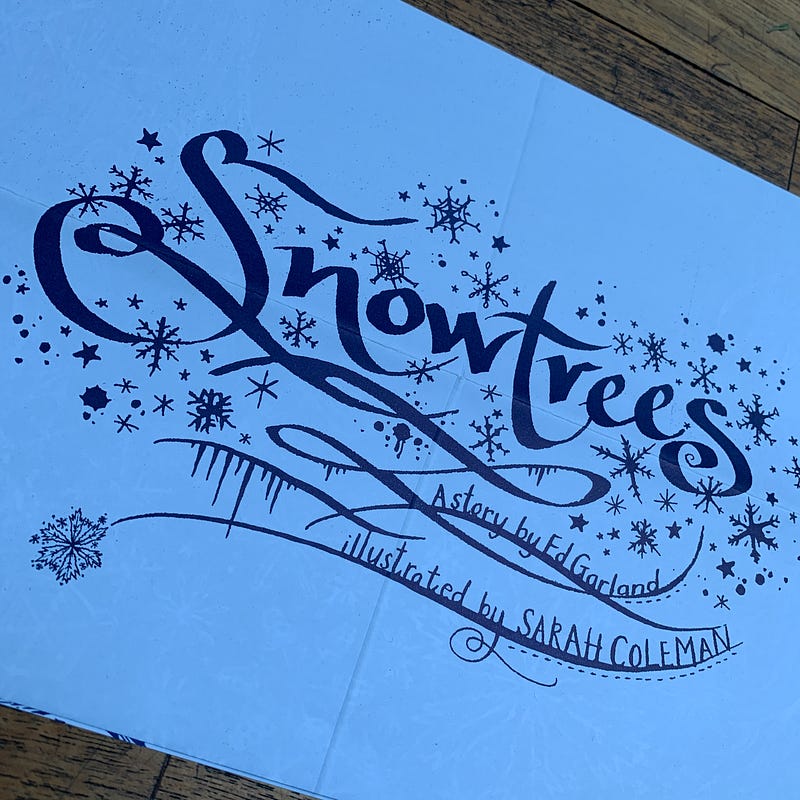
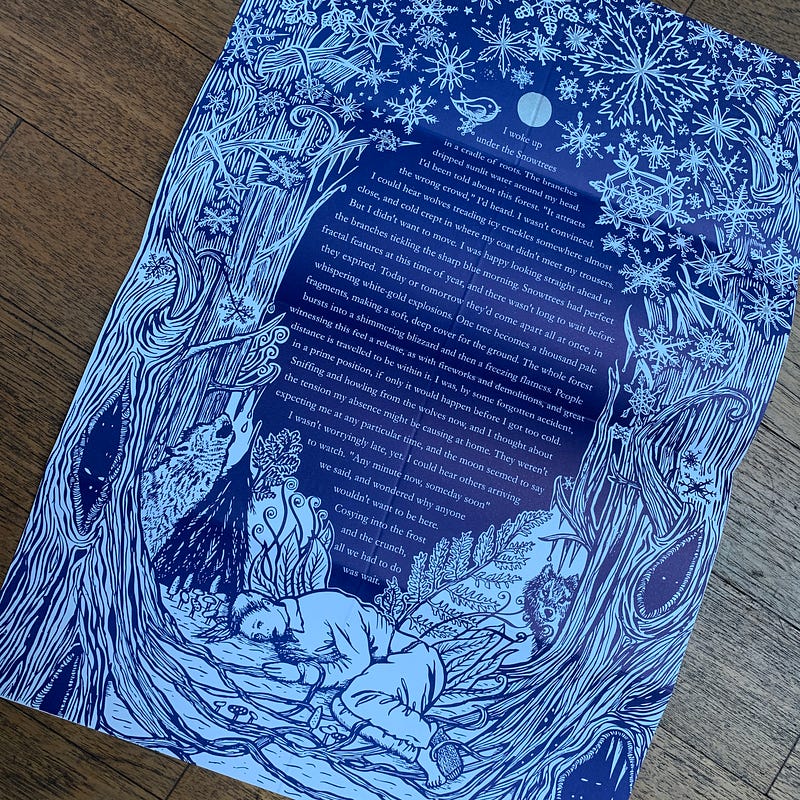
This is Snowtrees. We had just put up a big installation called ‘The Witches’ in the repurposed church building of our regular clients TBWA\Manchester, for which Ed had written the words, and we were in the van on the M6 driving home, knackered and full of chips. I checked my email. It was mid-October and, thinking ahead, I’d asked Ed to write a piece for our annual Christmas mailing, which would take a different form every year. I would illustrate whatever he wrote. His story was in, and I read it; crying, because it was so beautiful and it was exactly what I’d hoped for. Even a little more than that, in fact.
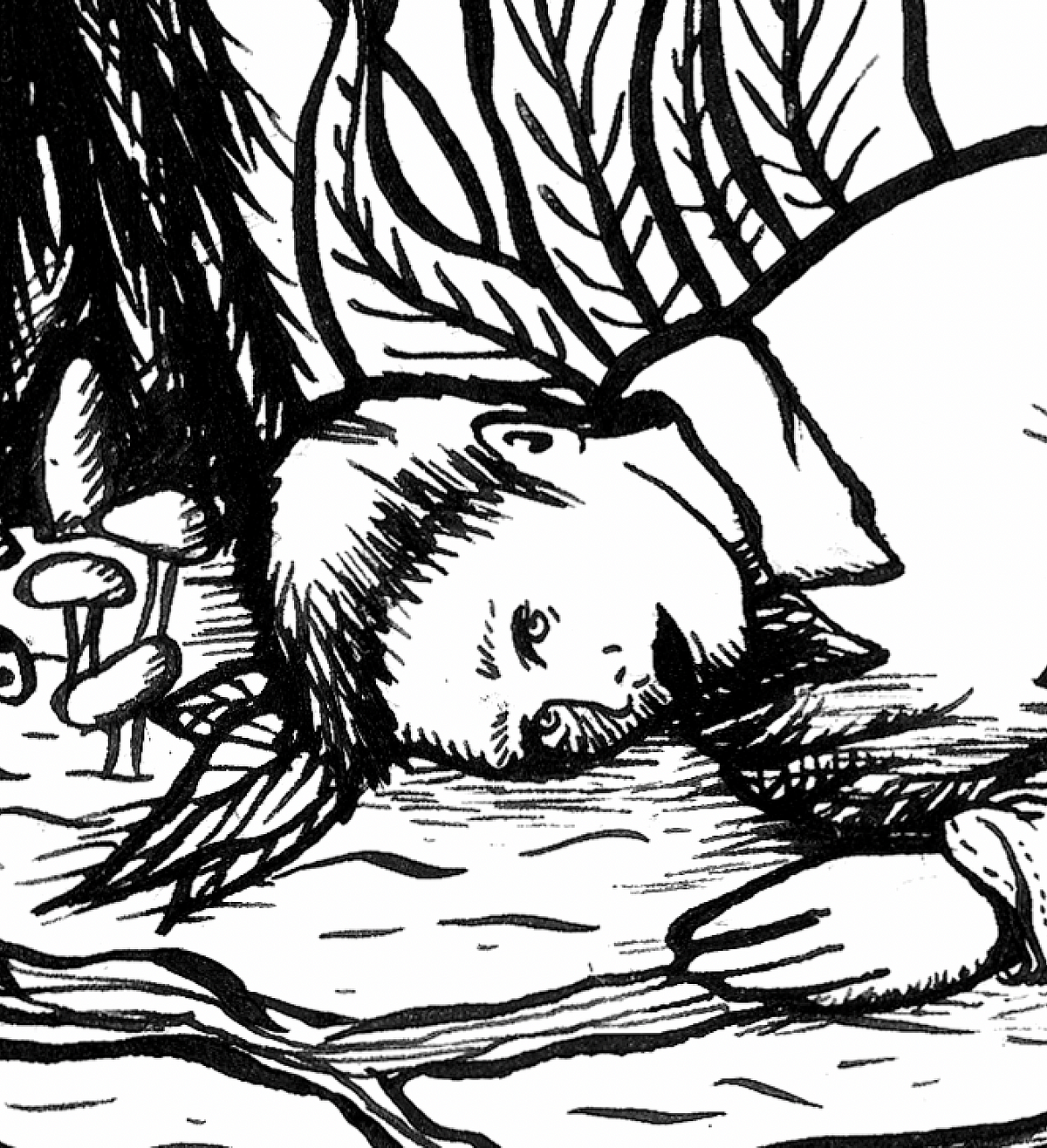
I made a black and white ink illustration to go with it, indulging my longing for eerie stories to illustrate and my love of all things creepy and atmospheric. (Whenever the opportunity arose for some personal or promotional work, this is often the direction it would take). We had a 1000 copies printed to A3 in navy blue ink, foldable to A6 (sorry Kelly, who did all the folding). They were addressed individually and sealed with a tiny label, and it stood like a Christmas card with a snowflake-tree on one side, inspired by a duotone 1950s fold-out birthday card we’d had on the studio wall for years.
And there it was. Ed will probably do the thing people often do when confronted with old work — shrugging off my praise, pointing out all the things that are ‘wrong’ with it, maybe even cringing a little— but I love this piece of writing, and more importantly, I love the creative response it triggered in me. Although I too can see things I would do differently now, I love the outcome.


I do a lot of talks and seminars for schools and colleges, and one of the questions I get asked the most is “how important is it to have a ‘style’?” — followed by “how long did it take you to get your own style”?
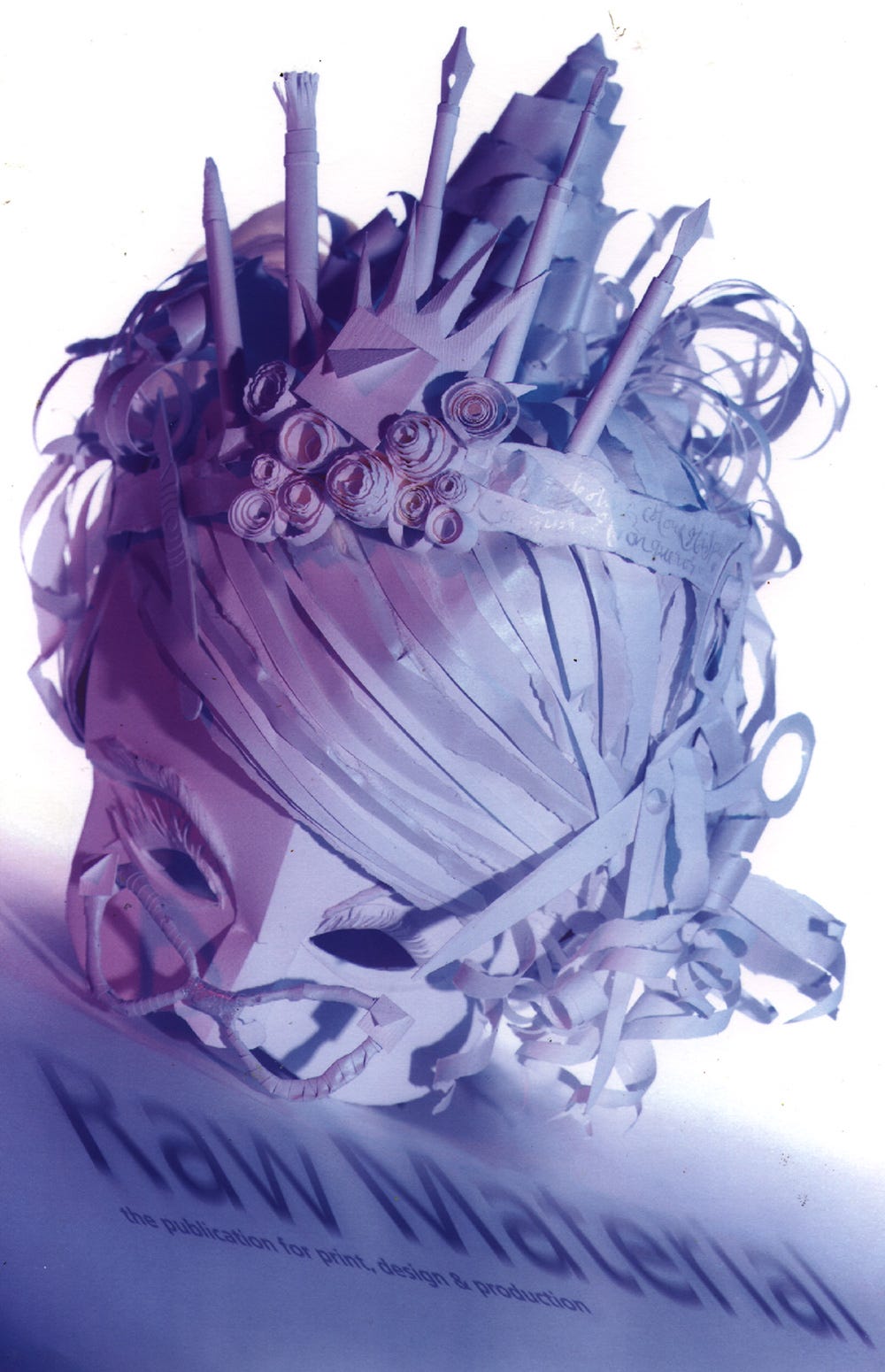
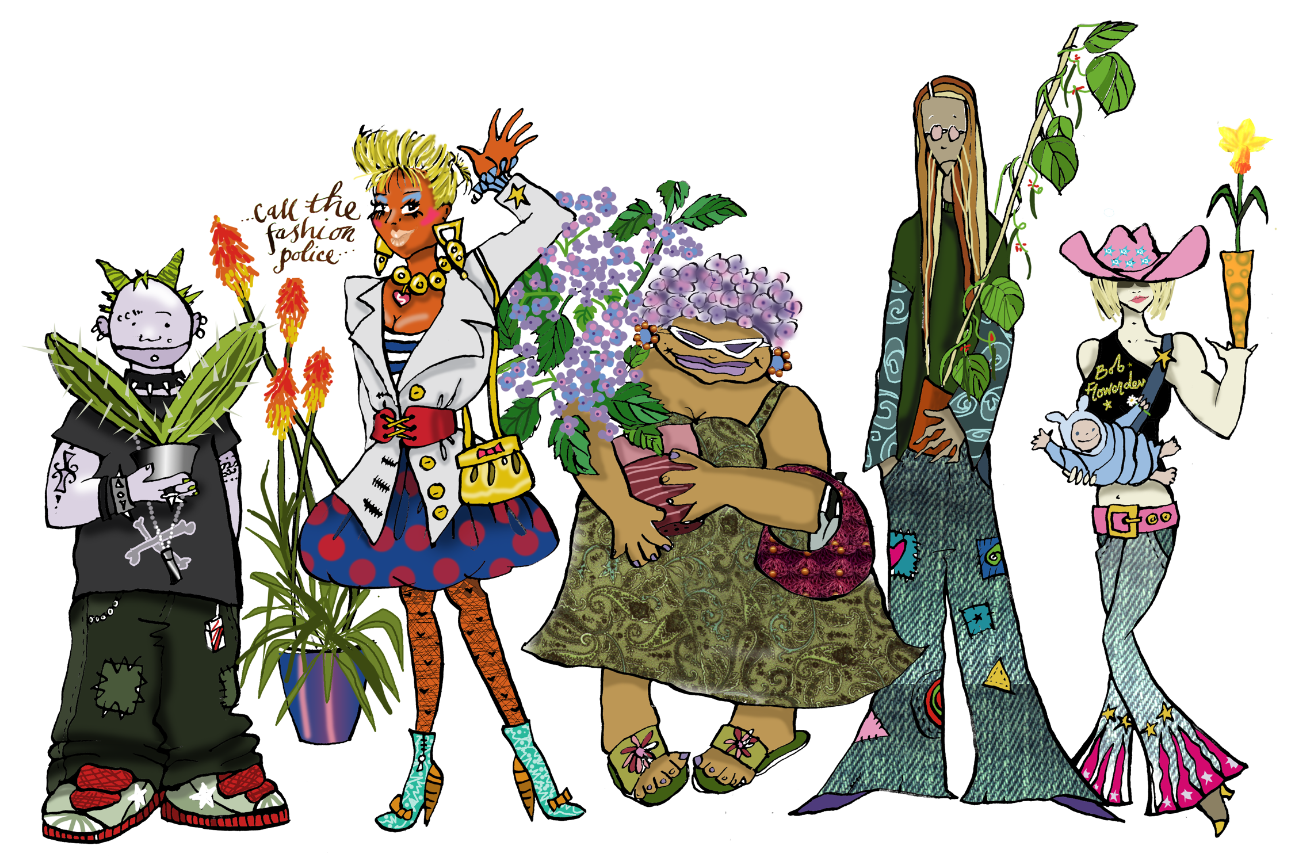
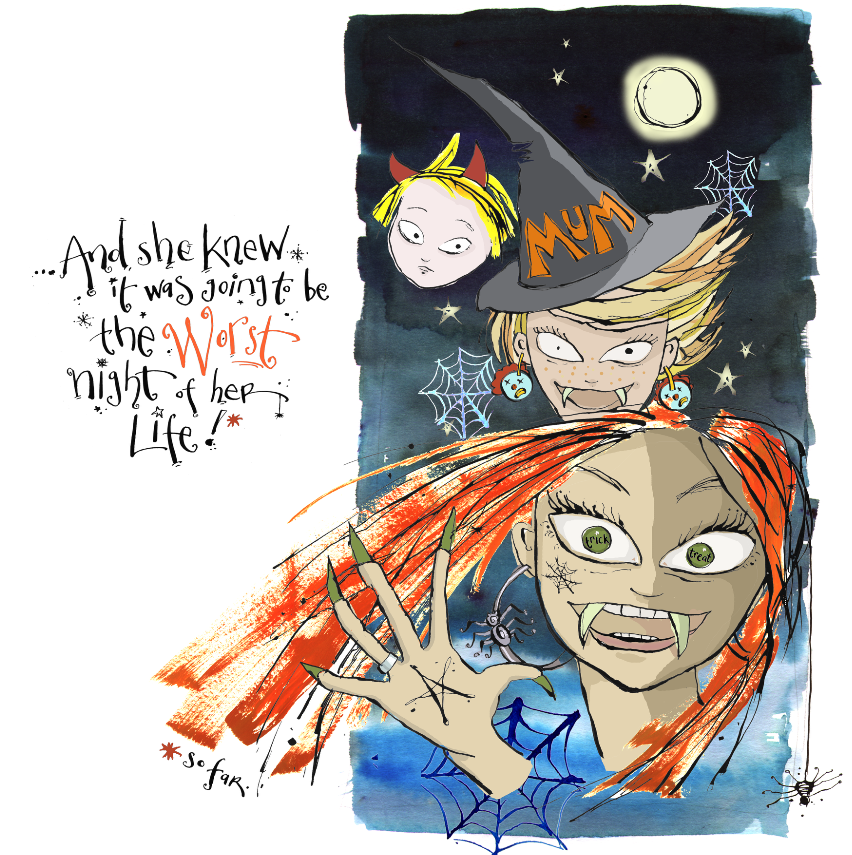
My answer to this is not straightforward. Have a quick scan down the sample images in this post — they’re all from the same period of about 7 years, from graduation onward. You can see what was going on; I’d graduated with a portfolio of wildly ambitious 3D work, built pieces for the stage, costumes and models as well as poster designs and storyboards and illustrations full of lettering and ink. I basically wanted to do Everything — and, I would pretty much go on to do that, but for a young illustrator starting out the resultant folio was what clients described as ‘exciting but confusing’.
How would I get this (pre-internet) 3D work to them? It would all need photographing — would the client pay me for that? If they give me a brief, how do they know what they’ll get back — will it look like this, or this?

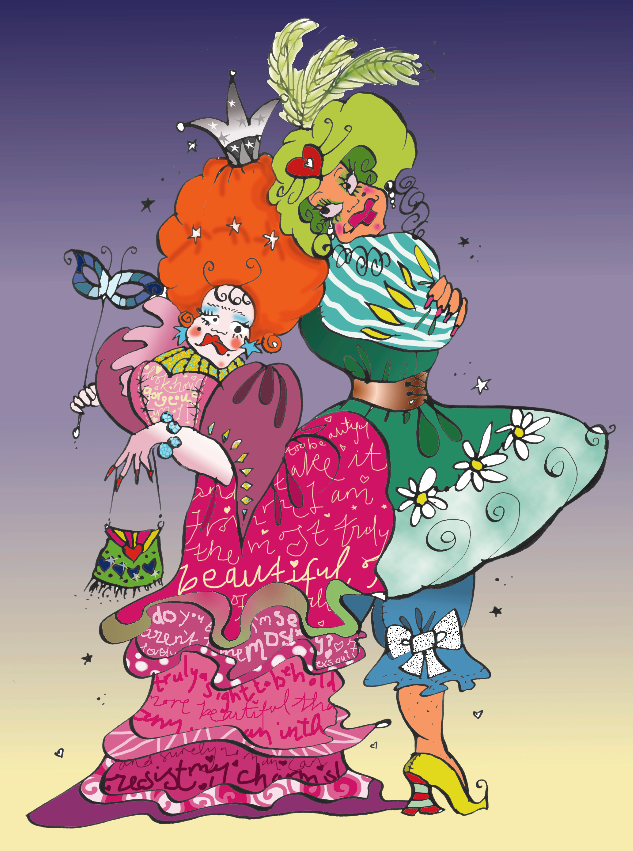
I liked to build stuff, I loved to work on a large scale with pastel pencils (you can see an A0 example of that in the slides) AND with my inks, and I loved lettering (I won awards for it and was one of the earliest to posit hand lettering as a ‘thing’ you could commission in its own right — more on that in a separate blog) but I was also fascinated by digital; check out the work I did for the panto dames!

Clumsy but wildly energetic, I was quite literally laughing as I drew them; they were real panto dames. What made people like this image is the energy and the humour — those things eclipsed the lack of sophistication (and lack of Wacom tablet) in the rendering. I only had a mouse then, so you can see that the work here was created with an ink drawing which was then digitally coloured.


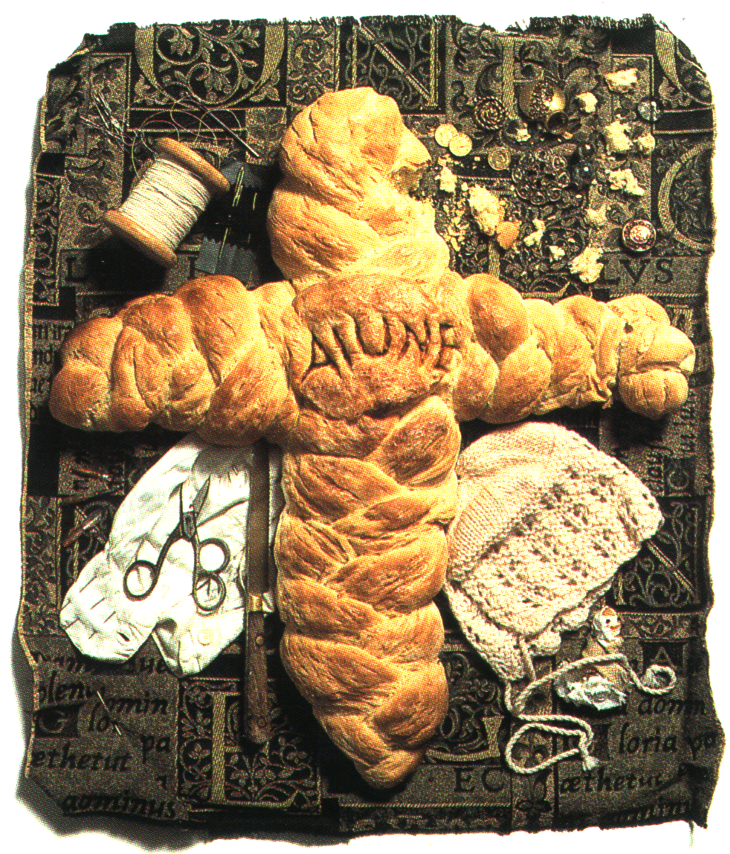
I went on to have multiple magazine series in that style, so I suppose it could be argued that was ‘a style’ for a while — but running simultaneously, I also illustrated a magazine column once a month with built, almost set-like pieces which were photographed, like this (yes, this one involved baking real bread; real baby clothes and a real self-made poppet doll. I ate none of them afterwards, and the illusatration actually lasted for years).

All of these images are very ‘me’, but it isn’t one style and it’s definitely not one medium.
In fact, I’ve always viewed this multi-medium thing as a blessing, not a curse. It means I’ve been able to turn my hand to a vast array of opportunities that, had I favoured one style, medium or way of working at the exclusion of all others, I would not have been willing or able to tackle. It’s made me flexible, adaptable and, in a lot of cases, bold — the ‘sure, I can do that!’ approach (say yes now, worry about it later). A 15m mural in paint? Check. A 3D piece to illustrate a spoken word poem? Check. Detailed pen and ink drawings for a ghost story? Check. Fast digital pieces for an urgent editorial? Check. A set of animated GIFS? Check.
You get the idea.
Some people use pseudonyms to identify their different styles — an example is Toby Leigh who also works as Tobatron, or Tim McDonagh who also works as Avril15. Those identities exist to make sure you know which of their worlds you’re in, and that’s definitely something I’ve thought about over and over again — I even have the names worked out. But I’ve never actually done it…maybe I still will, though, and it could work for you, too, with careful consideration and enough work to hang under each banner — this is important, as clients will need to see that you’re well-versed and a ‘safe pair of hands’ in all of the styles or identities you put forward.


Over time, my ways of working all combined to create a body of work that utilises several different media, but hangs together as a look which is definitely ‘mine’. And the ‘mine’ comes via the movement, the energy, the content and the vibe, rather than the equipment I used to make it.
So I say, DO NOT worry about ‘style’ — if you see someone who looks to have a really strong visual language or colour scheme or way of working, they’ve likely had a long time to develop that. Maybe they don’t actually HAVE other ways of working — maybe they can’t! — or maybe they just don’t feel comfortable offering more than one look. And what you probably won’t see are the mountains of work that led to what you see in front of you.

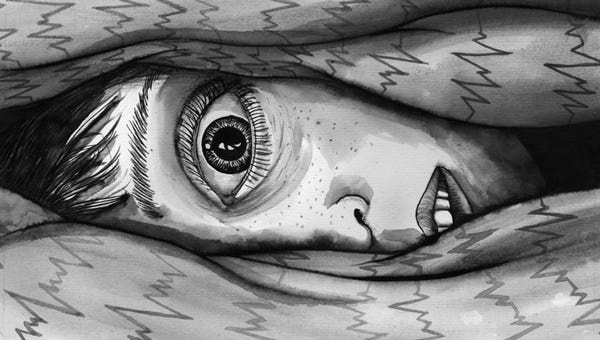
Oh no...I'm awake.
My sleep disruption began many months ago as a product of, I think, a combination of pandemic, work anxieties, and a major hormonal re-wiring (the whole dashboard out, y’know the kind).
I would get to sleep just fine, but wakefulness would boot me out of my slumber every single night, always around 3am, and last anywhere from an hour to…the rest of the night.
I’m my own boss, which means that technically I can ‘get up when I want’, but I really can’t; I still have a full 8+ hours of work every single day, clients depending on me, and the other, myriad responsibilities that come with running a small company. And the later I would get up, the worse I felt — physically and emotionally, since there’s still a stigma attached to ‘people who get up late’ — and the more I worried about the whole thing.
I recently shared a couple of things on social media and in my regular newsreel which clearly rang a bell with a lot of people, so I’m sharing and expanding on those things here.

So, the causes of waking up I couldn’t do an awful lot about, but I could control how I felt before I went to sleep, during wakefulness and during the day. I quickly established that late caffeine was one factor (after about 20 years of being completely caffeine free, I’d gradually discovered the joys of strong fresh-ground coffee again over lockdown). So no coffee after 2pm — 3m at a push. After that, all-decaf-everything.
The I worked out that I was eating too late at night — has to be before 8pm now — ideally at 7 — or I really am affected. Your poor body’s trying to digest when you should be asleep!
THEN I realised I was still on my phone answering email and messages late at night, sometimes actually in bed — in my book, that’s a a dirty habit, but one I found I’d slacked into (that’s why they call it ‘sleep hygiene’).
And finally, I clicked that I wasn’t getting enough fresh air during the day; I’m a lifelong gym-goer but it’s not the same as the outdoors and vitamin D, so I started walking. A LOT. Didn’t matter when — sometimes a ‘commute to work’ walk of a mile, sometimes a mid-afternoon one of 3 miles or more, sometimes one of those plus another mile just before bed, or just a tiny ten minute walk by itself last thing, if I really couldn’t manage to get out in the daytime. Walking is famously underrated, and it comes with the opportunity for thinking time, podcasts, checking out some new music, or just silence.
And this bit is important:
I realised that when I was waking up (always around 3am) I was bothered and anxious — but I wasn’t waking up BECAUSE I was bothered and anxious, I was anxious because I had found myself suddenly awake. I changed my mindset (which took a little while) and flipped it around, so that when I would find myself awake, instead of going “ohhh nooooo I’m awake this is hell not this again I don’t want to be” I would blink a bit and go, “oh, ok! Looks like I’m awake. OK; no bother. We’ve been here before. You woke up because you were just a bit hot/thirsty/uncomfortable. Have a drink of water, shuffle about, maybe go for a wee, try again.”
And THAT last change has made the biggest difference. I don’t fret about it any more, and I remind myself that in the middle of the night, because you have no other distractions — even simple visual distractions like other people and your surroundings — your mind focuses entirely on what it’s worrying about, so those things seem HUGE and insurmountable.
And they are not!
If I really, truly cannot get back to sleep, I get up and try to sleep somewhere else — one of the sofas, I’ve even tried the cool living room floor — or in extreme circumstances I go to my desk because I may as well be doing ‘something’. But I don’t set my expectation too high; doing any little job in the middle of the night is a bonus, but your aim is to get into bed and back to sleep.

The other important realisation that unfolded over time was that a good night starts with a good evening.
These are the steps we take now, to make sure we give ourselves the best chance of sleeping, and staying asleep. These aren’t ads, by the way; they’re just what we use, and what we like. No-one has paid me to write this! (I don’t do that, before anyone else asks).
1. No caffeine after 2pm.
OK 3 at a push, but anything after that will probably cost you in the small hours!
2. A couple of hours before bed: hot chocolate with reishi mushroom and ashwaganda.
Both help the body to unwind and get ready for sleep. You don’t need to add sugar, but we add a dash of maple syrup.

3. If hot chocolate’s too much for that time of night, we swear by Pukka ‘Sleepy Tea’

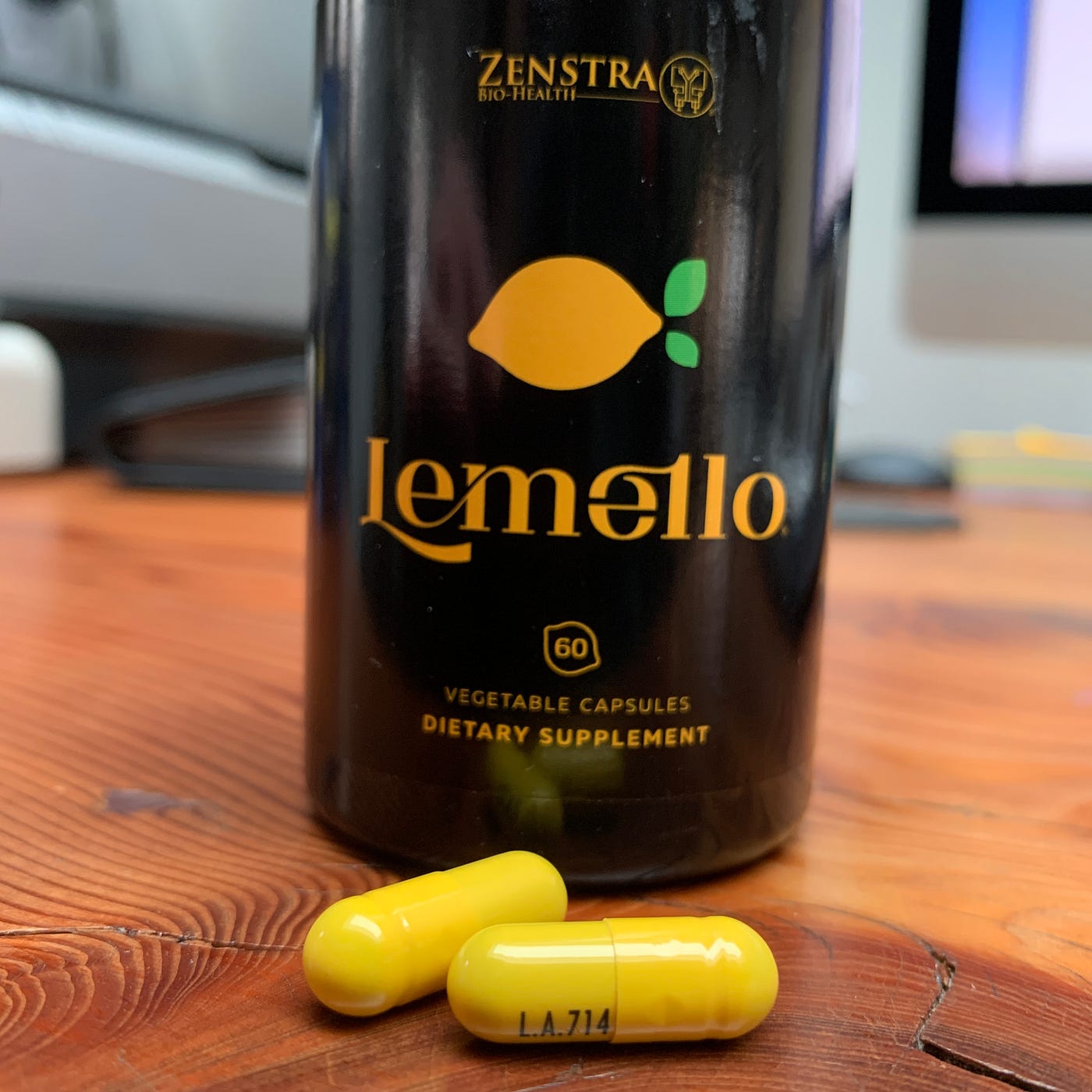
4. About half an hour before bed: a couple of Lemellos.
These little all-natural capsules take the edge off the white noise of anxiety and worries safely, and without any after/side effects (and no dependency issues).

5. I’ll have my earphones next to me in bed in case I wake up, and if I do I’ll listen to some rain sounds (very soothing, especially for someone like me who loves any tale beginning with ‘it was a dark and stormy night’) or do some breathing.
They both sound a bit clichéd, but there’s a reason for that — they work!

Remember: this is just what’s worked for me, over two years or so of trial and error, and changing one thing at a time then observing the result. Some of these might work for you too. They might not, but give them a go!
Hope it helps.